
Mission Igniter Announces Leadership Transition and Enters a New Season of Multiplication
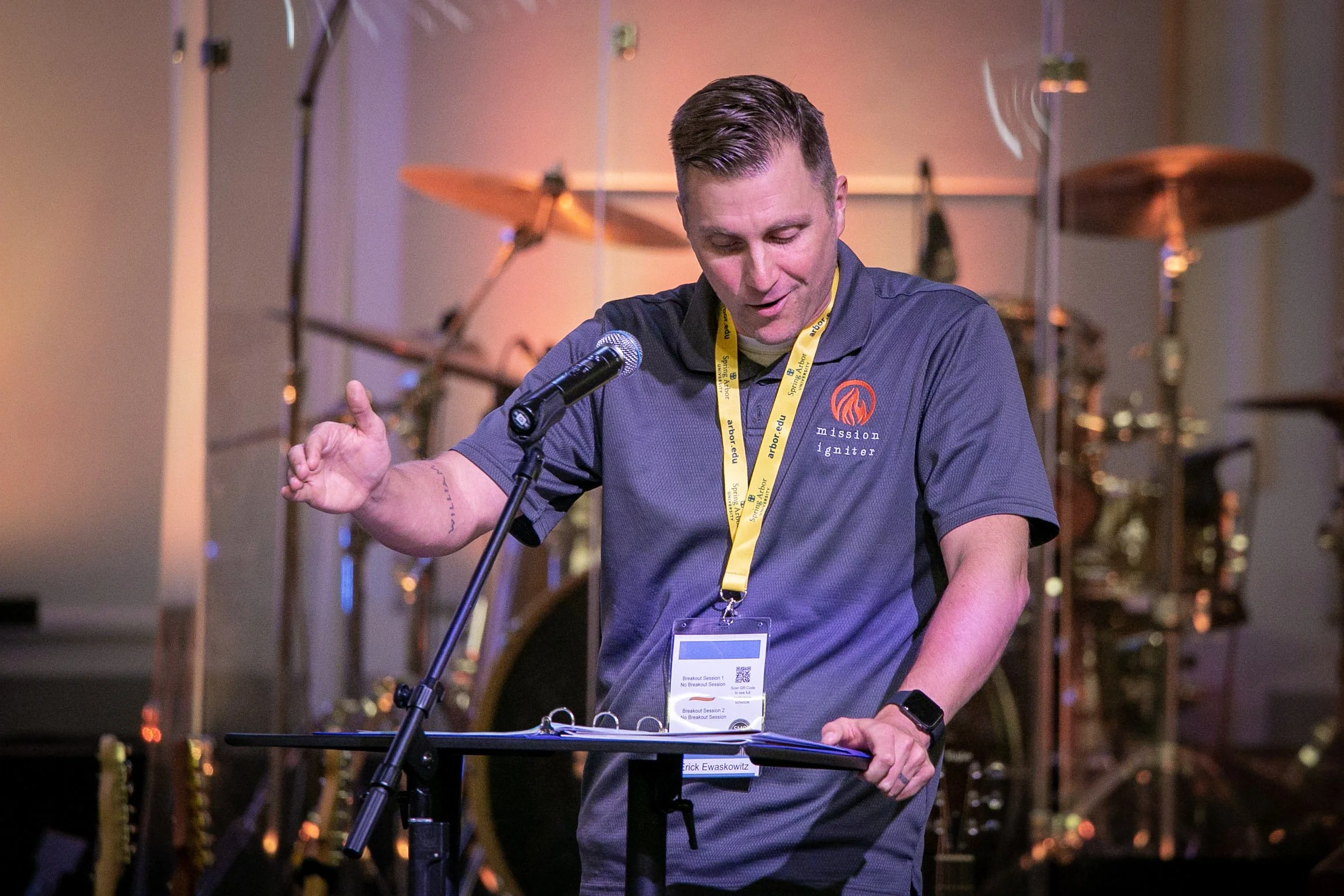
Mission Igniter is entering a new season of leadership as part of its continued commitment to catalyzing a movement of multiplication across the Free Methodist Church.
This transition reflects growth, clarity, and organizational maturation. Mission Igniter’s vision of catalyzing a movement of multiplication remains unchanged.
Mission Igniter was created to strengthen leaders, plant new churches, and build systems that sustain long-term fruitfulness across the denomination. By God’s grace, that work continues to expand.
Since its launch, Mission Igniter has helped catalyze more than 50 new churches and emerging ministry points across the country — reaching diverse populations and worshiping in multiple languages. More than $1 million annually is now being mobilized toward church planting efforts. Multiple cohorts of existing churches have engaged in revisioning processes to become multiplying churches. Assessors, coaches, and vision strategists are being trained and certified across conferences to expand local capacity for multiplication.
Conferences are engaging Mission Igniter’s services more broadly than ever before, and new churches continue to be planted.
Leadership Transition
As part of this transition, Dustin Weber is concluding his role as Executive Director and stepping into a new role as Director of Development with Free Methodist World Missions.
During his leadership, Mission Igniter helped shape a clear and compelling multiplication vision for conferences, developed pathways for training and certification, strengthened church planting systems, and catalyzed new churches and ministry initiatives across the country. The fruit of that work now provides a strong foundation for this next season.
Moving Forward
Mission Igniter’s leadership oversight will be aligned with the Shoreline Conference, providing a clear executive home while continuing to function as a shared national resource.
Erick Ewaskowitz, Superintendent of the Shoreline Conference, will provide visionary and executive leadership for Mission Igniter. While Erick will give oversight, he will not have any day-to-day responsibilities with Mission Igniter, as his full-time focus and commitment is to establishing and leading the Shoreline Conference.
Derik Heumann, Director of Church Multiplication for Shoreline Conference, will oversee operational delivery of coaching, training, and consulting systems. These services will be integrated into the multiplication support offered by the Shoreline Conference.
Julie Weber will continue coordinating services across conferences — managing assignments, tracking progress, facilitating communication, and ensuring smooth execution.
Jenny Rivera, who leads the FMCUSA Resource Center, will continue overseeing Mission Igniter’s administrative services through a formal partnership between FMCUSA and Mission Igniter. Bonnie Philson and Jill Lane remain integral members of this administrative team, continuing to provide trusted accounting and operational support.
Dwight Weber will continue leading and expanding Assessment Services, serving church planters, Conference MEG Teams, and appointment processes.
Megan Weber will continue serving part-time, providing pastoral care, spiritual direction, and enrichment for church planters through a self-funded role focused on strengthening the spiritual health and resilience of leaders.
This partnership strengthens and expands Mission Igniter’s ability to serve church plants and conferences nationwide while maintaining the systems developed over the past several years.
A Distributed and Sustainable Model
This leadership model allows Shoreline Conference to integrate multiplication systems into its own staffing structure while ensuring that Mission Igniter’s services remain available to conferences and networks across the country.
As conferences across the Free Methodist Church continue to strengthen staffing and regional collaboration, Mission Igniter’s role increasingly functions as catalytic, equipping, and collaborative — supporting multiplication efforts wherever they are emerging.
Mission Igniter remains committed to serving church planters, local churches, and denominational leaders pursuing multiplication in their contexts.
Learn More
Discover the many ways Mission Igniter is here to support your church, your leaders, and your multiplication efforts:
Mission Igniter Leadership Transition – Frequently Asked Questions
1. What is changing in Mission Igniter’s leadership?
Effective March 1, Dustin Weber concluded his role as Executive Director of Mission Igniter and transitioned to serve as Director of Development with Free Methodist World Missions.
Mission Igniter is moving from a centralized executive leadership model to a distributed structure aligned with conference-based staffing. This reflects organizational maturity and long-term sustainability.
The mission and services of Mission Igniter remain unchanged.
2. Why is Shoreline Conference serving as Mission Igniter’s executive home?
Shoreline Conference is a newly forming conference with multiplication at its core. As it launches, Shoreline recognized the importance of beginning with established systems for assessment, coaching, training, and church multiplication support.
Rather than building these systems independently, Shoreline is incorporating and strengthening the infrastructure, frameworks, and resources developed through Mission Igniter over the past several years.
This alignment allows:
Shoreline to begin with proven multiplication systems already in place
Mission Igniter to have a clear executive home with conference-level staffing aligned around multiplication
Other conferences to retain full access to Mission Igniter’s services
This is not a narrowing of access, but a strategic integration that increases sustainability and collaborative capacity across the denomination.
3. What does this mean financially?
This leadership model reduces national staffing cost while preserving service capacity. It reflects a distributed structure built on established systems rather than dependence on a single executive role.
Mission Igniter operates as a self-sustaining ministry model funded through:
Administrative service partnerships
Church planter support structures
Coaching and consulting services
Assessment services
Because the systems and delivery structures are already established, significant direct financial participation from partner conferences is no longer necessary to sustain core operations.
4. Is Mission Igniter changing its mission or focus?
No.
Mission Igniter continues to serve church planters, local churches, and denominational leaders in pursuit of catalyzing a movement of multiplication across the Free Methodist Church.
The leadership structure is evolving.
The mission remains the same.
Explore how Mission Igniter can support your ministry context:
https://www.missionigniter.org/
5. What will Assessment Services look like moving forward?
Assessment Services continue to expand under the leadership of Dwight Weber, Director of Assessment Services.
Mission Igniter offers multiple assessment pathways utilizing the TrueWiring suite of tools integrated with structured interviews, contextual discernment processes, and leadership development frameworks.
Assessment pathways are available for:
Church Planters
Calling and readiness evaluations
Leadership wiring and team dynamics
Behavioral insights and developmental planning
Local Church Leaders
Leadership health and fit assessments
Strategic alignment evaluations
Multiplication readiness frameworks
Conference MEG and MAC Teams
Appointment discernment processes
Leadership placement support
Structured evaluation tools integrated into conference pipelines
New assessment products are being developed in collaboration with the Center for Pastoral Formation.
Explore Assessment Services:
https://www.missionigniter.org/assessment
Schedule a conversation:
https://www.missionigniter.org/appointments
6. What is happening with administrative services?
Administrative services are being strengthened through a formal partnership with FMCUSA.
Jenny Rivera oversees Mission Igniter’s administrative services through the FMCUSA Resource Center. Bonnie Philson and Jill Lane remain integral members of the administrative team.
Mission Igniter’s administrative systems provide:
Centralized accounting and reporting
Donor contribution processing
Payroll and compliance management
Budget tracking
Administrative coaching
Learn more:
https://www.missionigniter.org/admin
7. Will Mission Igniter continue serving as an incubator?
Yes.
Mission Igniter continues to function as a church multiplication incubator under its 501(c)(3) structure.
Church plants operate as DBAs under the Center for Innovative and Urban Ministry (CIUM), providing:
Legal covering
Financial infrastructure
Donor receipting
Operational systems
Existing church plants are unaffected by this transition. New church plants are welcome to explore launching through the incubator.
8. Is Mission Igniter a 501(c)(3)?
Yes.
Mission Igniter is incorporated as the Center for Innovative and Urban Ministry (CIUM). “Mission Igniter” and each church plant operate as assumed names (DBAs) under CIUM.
9. Who does Mission Igniter serve — and how?
Mission Igniter serves three primary audiences:
Church Planters
https://www.missionigniter.org/planters
Local Churches and Leaders
https://www.missionigniter.org/churches-leaders
Denominational and Network Leaders
https://www.missionigniter.org/denominational-leaders
10. How can I financially support a church plant?
You can invest in sustainable new churches through Mission Igniter’s incubator.
Give Electronically:
https://www.missionigniter.org/give
Give by Check:
Mission Igniter
PO Box 257
Spring Arbor, MI 49283
Julie Weber
517-507-4237
https://www.missionigniter.org/appointments